C4K #1
The first blog that I was assigned to comment on was the blog of a student named Juanchi. He goes to Chesnut Tree Elementary School, and he is in Ms. Greta Sandler's class. Their school is located in Buenos Aires. On their class page, it states that the class is "5th Chesnut", so I believe that Juanchi is in the 5th grade.
Before I commented on his blog, I looked at their class blog and the teacher's blog. While reading Ms. Sandler's blog, I found that she and I have a lot in common. She is an ESL teacher who teaches English as a second language. I found this interesting because I am currently learning Spanish as a minor.
The lastest blog entry that Juanchi had shared was a YouTube video from a major soccer game. He posted this video because he believed it to be the greatest attempt to score a goal in the history of soccer. He called it "the best missed goal."For those of you who do not know, the Latin American countries are really into soccer. Soccer in Latin America is like football in America.
Here is the comment I wrote for Juanchi:
Juanchi,
Hi, my name is Amy Archer. I am a student at The University of South Alabama in Mobile, AL. I am studying Elementary Education in order to be a teacher. I am also studying Spanish. I see that your class is from Buenos Aires, so I know that you really enjoy watching football.
Football is called "soccer" in America. Football is used to describe "el fútbol de americano" in America. I really enjoyed your video. I am glad you decided to share it. Are you on a football team? Do you play football for fun with your friends? If you had been in the football game in the video, do you think you would have made the goal?
Amy Archer
C4K #2
My second assignment was to post on the fifth post down of Mr. Capps' Classroom Blog. Mr. Capps is a former student of The University of South Alabama. He is currently teaching 3rd grade at Gulf Shores Elementary School in Room 302. His blog is very welcoming and literate. If you have not checked out his blog yet, I highly encourage you to.
The post that I commented on was about a game that his students had played to learn how to count by 10's. The game was very creative because it also included counting money. The children had two dices labeled up to 6. Each time they rolled the two die, the number that they rolled was the number of pennies they received. Now, the object of the game was to have the fewest amount of coins. Every time a student got 10 pennies, they would trade it in for a dime. When the student had 10 dimes, they traded their dimes in for a dollar bill. Each student continued to play until they had received two dollars.
Here is the comment I left on Mr. Capps' Post:
Mr. Capps,
Hi, my name is Amy Archer. I am a student in Dr. Strange's EDM 310 class. I loved the money game that you shared in your blog! It is a very creative way to teach students how to count by tens and add multiples of ten. I was also impressed that you incorporated the use of pennies, dimes, and dollars because this allowed the students to see the true value of money. I believe it is important for children to learn at a young age that money is not bad or stressful. After all, the use of money and saving is how we survive in this world.
Another idea that stood out to me was that you had students in the classroom helping other students who did not understand a concept completely. Peer tutoring is a great idea for any classroom because the children who give help are reinforcing in their brain what they already know, and the children who are receiving help are encouraged by their classmate.
I love how you included pictures because they are a wonderful insight to your classroom. You are doing great things with your students! Keep up the hard work Mr. Capps!
Amy Archer
Friday, October 12, 2012

Sunday, October 7, 2012
Project 9a: My Timeline
I created this timeline based off of the Alabama Course of Study. In fourth grade, the state of Alabama requires students to understand and interpret the Gettysburg Address. If I ever teach fourth grade, I could use this timeline to introduce my students to Abraham Lincoln and his impact on our nation before I go into detail about his Gettsyburg Address. This is just a practice timeline, but I wanted to try to incorporate a topic from the Alabama Course of Study because I will have to follow it in the future. I hope that you like my timeline. If you think I could add any dates, or other topics to better my timeline, please comment below.
Saturday, October 6, 2012
Blog Post 6
Randy Paush's Last Lecture

Randy Pausch died on July 25, 2008, of pancreatic cancer. Before his death he made his last lecture. His last lecture was very inspiring to me, and I learned that no matter what happens to me in life I cannot change what comes my way. However, I can change how I react to the situations that I am dealt in life. If any of you bloggers have not watched his last lecture yet, I highly encourage you to take the time to watch it.
In his last lecture he talked about his childhood dreams, how to enable the dreams of others, and the lessons he had learned. As a child, Randy did a lot of dreaming. A few of his childhood dreams were to be in zero gravity, play in the NFL, and to become an imagineer. Although Randy never made it to the NFL, I loved how he interpreted his football career. He believed that football helped get him through life because of the fundamentals he learned and the hard work his coach instilled in him.
Randy said, "Experience is what you get when you didn't get what you wanted." This quote not only gives me a better outlook on my life, but it also instills in me an approach to teaching and parenting that I want to use one day. Learning from your experiences is what Randy called "head fake" learning. "Head fake" learning occurs when children learn indirectly. For example, in football, students are "head fake" learning how to be group adaptable and the importance of teamwork and dependability.
In my future classroom, I believe that is important that I incorporate "head fake" learning. Sports and extra curricular activities are a great way for students to "head fake" learn, but group projects can help them to learn how to be a part of a team as well. I want my students to learn how to adapt to any kind of group. Whether they are the leader, recorder, discusser, creative mind, or even the participator, each student can contribute their part to the group. This is important to me because we all have to learn to adapt to different groups in the real world.
Another great quote that Randy mentioned when he talked about his childhood dreams was, "Brick walls are there for a reason: They let us prove how badly we want something." This was evident when Randy achieved his childhood dream of becoming an imagineer. In order to be a part of the Aladdin Project, Randy was a cap cleaner. Although this job was not the job he had dreamed of, it still gave him a chance to be a part of the Aladdin Project. He did not have to have a high job in this project to be influenced. Just by working with the crew, he saw how the Aladdin Project brought together artists and engineers.
After learning about the Aladdin Project and seeing how the artists and engineers had to work together, only made it more clear to me that I really need to influence "head fake" learning in my classroom. Both of these professions are very different. They think with different sides of the brain, and therefore, they do not think a like. It is what the two professions can create together that makes them adapt to each other. This is another reason why I will make sure to incorporate a lot of group activities or projects into my lesson plans. It is important to allow students to think off of each other and build new ideas with different personalities because you never know who they will have to work with one day.
Another topic that Randy Pausch touched on was on to enable the childhood dreams of others. He told viewers about the ways that he had learned to help others through his on teaching. One of the most important aspects that stood out to me that he said was, "You have to the set the bar high for your students and do not settle for less." The reason he said this was because he had assigned his students a project and was not really impressed with their work. Although he was not impressed with their work, he did not think their work was bad either. In conclusion, he ended up telling his class, "Your projects were pretty good, but I know you can do better."
This idea really stood out to me, and I plan to use it my classroom one day. If you really think about it, teachers determine the outcome of their students abilities to a certain level. I know that some students will decide for themselves if they do not listen or put forth effort, but what about the students who do what teachers ask of them? How will these students know they are not doing the best they can unless we challenge them? I really saw a different outlook on how I should teach just by knowing that I will be the one setting the bar of achievement.
The last topic Randy talked about was the lessons he had learned in life. He said that he had learned from his parents, mentors, and students. I agree with every part of this because your parents are the ones who guide you through the first eighteen years of your life. Mentors are also there helping you through childhood and then again when you are no longer living with your parents. Later in life when you become a teacher you learn from your students. I am a strong believer that teachers can learn just as much from the students as the students learn from them.
Some the advice Randy left listeners with was to respect authority while questioning it, loyalty is a two way street, never give up, and to help others. He also said that there are ways to get people to help you. The first step is to believe that you cannot make it alone. Next tell the truth and be earnest. And lastly he said to apologize when you mess up and focus on others, not yourself.
I honestly believe anyone can learn from these steps. We need the support of others through life, and it is not possible to make it without a little help along the way. As a future teacher, I will practice these steps at the school in which I work in because I know that I will need help from my colleagues. Also, I want to continue to put others first in my life. As a child I remember learning that key to living a joyful life was to put Jesus first, then Others, and then Yourself.
As a future teacher, it is my goal to help each and every student that comes my way to develop into the best adult that they can be. I know that in order to achieve this goal I will need help from others, and I will not be able to complain. Instead of complaining I will only push harder. As I help these students, I will achieve my dream of becoming the teacher that students will remember.

Randy Pausch died on July 25, 2008, of pancreatic cancer. Before his death he made his last lecture. His last lecture was very inspiring to me, and I learned that no matter what happens to me in life I cannot change what comes my way. However, I can change how I react to the situations that I am dealt in life. If any of you bloggers have not watched his last lecture yet, I highly encourage you to take the time to watch it.
In his last lecture he talked about his childhood dreams, how to enable the dreams of others, and the lessons he had learned. As a child, Randy did a lot of dreaming. A few of his childhood dreams were to be in zero gravity, play in the NFL, and to become an imagineer. Although Randy never made it to the NFL, I loved how he interpreted his football career. He believed that football helped get him through life because of the fundamentals he learned and the hard work his coach instilled in him.
Randy said, "Experience is what you get when you didn't get what you wanted." This quote not only gives me a better outlook on my life, but it also instills in me an approach to teaching and parenting that I want to use one day. Learning from your experiences is what Randy called "head fake" learning. "Head fake" learning occurs when children learn indirectly. For example, in football, students are "head fake" learning how to be group adaptable and the importance of teamwork and dependability.
In my future classroom, I believe that is important that I incorporate "head fake" learning. Sports and extra curricular activities are a great way for students to "head fake" learn, but group projects can help them to learn how to be a part of a team as well. I want my students to learn how to adapt to any kind of group. Whether they are the leader, recorder, discusser, creative mind, or even the participator, each student can contribute their part to the group. This is important to me because we all have to learn to adapt to different groups in the real world.
Another great quote that Randy mentioned when he talked about his childhood dreams was, "Brick walls are there for a reason: They let us prove how badly we want something." This was evident when Randy achieved his childhood dream of becoming an imagineer. In order to be a part of the Aladdin Project, Randy was a cap cleaner. Although this job was not the job he had dreamed of, it still gave him a chance to be a part of the Aladdin Project. He did not have to have a high job in this project to be influenced. Just by working with the crew, he saw how the Aladdin Project brought together artists and engineers.
After learning about the Aladdin Project and seeing how the artists and engineers had to work together, only made it more clear to me that I really need to influence "head fake" learning in my classroom. Both of these professions are very different. They think with different sides of the brain, and therefore, they do not think a like. It is what the two professions can create together that makes them adapt to each other. This is another reason why I will make sure to incorporate a lot of group activities or projects into my lesson plans. It is important to allow students to think off of each other and build new ideas with different personalities because you never know who they will have to work with one day.
Another topic that Randy Pausch touched on was on to enable the childhood dreams of others. He told viewers about the ways that he had learned to help others through his on teaching. One of the most important aspects that stood out to me that he said was, "You have to the set the bar high for your students and do not settle for less." The reason he said this was because he had assigned his students a project and was not really impressed with their work. Although he was not impressed with their work, he did not think their work was bad either. In conclusion, he ended up telling his class, "Your projects were pretty good, but I know you can do better."
This idea really stood out to me, and I plan to use it my classroom one day. If you really think about it, teachers determine the outcome of their students abilities to a certain level. I know that some students will decide for themselves if they do not listen or put forth effort, but what about the students who do what teachers ask of them? How will these students know they are not doing the best they can unless we challenge them? I really saw a different outlook on how I should teach just by knowing that I will be the one setting the bar of achievement.
The last topic Randy talked about was the lessons he had learned in life. He said that he had learned from his parents, mentors, and students. I agree with every part of this because your parents are the ones who guide you through the first eighteen years of your life. Mentors are also there helping you through childhood and then again when you are no longer living with your parents. Later in life when you become a teacher you learn from your students. I am a strong believer that teachers can learn just as much from the students as the students learn from them.
Some the advice Randy left listeners with was to respect authority while questioning it, loyalty is a two way street, never give up, and to help others. He also said that there are ways to get people to help you. The first step is to believe that you cannot make it alone. Next tell the truth and be earnest. And lastly he said to apologize when you mess up and focus on others, not yourself.
I honestly believe anyone can learn from these steps. We need the support of others through life, and it is not possible to make it without a little help along the way. As a future teacher, I will practice these steps at the school in which I work in because I know that I will need help from my colleagues. Also, I want to continue to put others first in my life. As a child I remember learning that key to living a joyful life was to put Jesus first, then Others, and then Yourself.
As a future teacher, it is my goal to help each and every student that comes my way to develop into the best adult that they can be. I know that in order to achieve this goal I will need help from others, and I will not be able to complain. Instead of complaining I will only push harder. As I help these students, I will achieve my dream of becoming the teacher that students will remember.
Sunday, September 30, 2012
Blog Post 5
The iSchool Initiative

Travis Allen made a video called The iSchool Initiative when he was a senior in high school. The main question that Travis asked viewers in his video was "Does technology belong in our classrooms?" He believes that schools should be technologically literate and incorporate iPods into the classroom. By implementing the iPod into the classroom, schools would save hundreds of dollars and also create a "green" school because the use of pencil and paper would no longer exist. Of course teachers could still plan lessons that required paper and pencil, but the need would not be as high.
The iPod has numerous of applications that can be downloaded. Apple has created many applications that have an educational purpose. Some of these include Chemical Touch, USA Presidents, a Graphing Calculator, Digital Constitution, World Wiki, Star Walk, and many more. Travis believes that with use of these educational applications along with the email and iHomework applications, students and teachers can use these iPods to learn.
Travis Allen is now touring the world with a group of 25 students in order to influence his idea of the "iSchool." This group is called Zeitgeist Young Minds. They want to the world to rebuild, rethink, and retool education for the technological world that we live in today.
Eric Whitacre's Virtual Choir
In 2010, Jennifer Chamber introduced EDM 310 to Eric Whitacre's Virtual Choir. The virtual choir sang "Lux Aurumque". The video was revealed on Early WKRG5 Early Morning News.
The choir was put together entirely online. The choir had never met or practiced together. All the singers followed the same guidelines that Eric Whitacre provided. They were singing from all over through the use of blogs and videos.
The fact that this choir was developed entirely online is important to future and current educators. Karl Fish once asked the question, "Is it okay to be a technologically illiterate teacher?" I do not know your opinion on virtual choir, but it is definitely an eye opener to me of how important it is for teachers to understand how to incorporate the use of technology into the lessons that they teach. One idea I had for myself would be to record myself each day when I give a lesson and post it onto my classroom blog. The purpose of this idea would be to help students who miss a day of school to stay caught up with the rest of the class. Also, it would allow parents who may not remember how to do certain math problems or remember everything about Alabama's history to refresh their memory. It is important that parents know and understand what their students are learning in the classroom so that they can help them at home.
Teaching in the 21st Century
Kevin Roberts made a video that instilled the question "What doest it mean to teach in the 21st Century?" In today's world technology has established a whole new environment in the classroom. In the past teachers only had textbooks, lectures, and a few hands on activities to help them create a lesson. Today teachers can use a SmartBoard, iPad, iPod, or many other new technical resources to catch the attention of their students. With these new inventions in technology and the use of internet, learning is more fun, creative, and exciting.
A 21st century teacher needs to be technology literate, in my opinion, because almost every classroom now has a SmartBoard, and I am sure that there are more inventions to come. For example, when I watched the video A Day Made of Glass, I saw where Corning has created their own activity table made of glass that connects to a tablet similar to the iPad. If a teacher does not know how to use the iPad, how will they be able to use this invention if or when it is ever adapted into the classroom? I physically cannot wait until the Corning activity table is affordable for classrooms, and if given the chance I will learn to use this table because I know how much my students could benefit from it.
Today's educators have to rethink the tools they use and the type of problems they ask students to solve. With the use of the internet I will make sure to teach my students how to use reliable sources and use the internet to the most that it can be. Portfolios are also a good way to help students progress in their work and reflect on it over time. I will use e-portfolios because they are easier to use and can be viewed easily online. Parents can also look at their child's work because an e-portfolio is online.
I liked the positions that Roberts addresses in the video. He says that teachers need to be relevant, challenging, and engaging. Engaging is different than entertaining. Teachers engage students to create active learning, a meaningful purpose, and to allow students to solve problems creatively. I will challenge my students to be engaged in their homework assignments. It is important to me for my students to explain, justify, and evaluate their answers.
I also want to allow students to use numerous resources when they are learning in my classroom. This will help my students to better their skills and intelligence. The use of numerous sources creates in depth conversations in the classroom.
I will be very lucky to become an educator of the 21st century because there are so many resources out there now. In today's society students can create their opinions through blogging, podcasting, animating, etc. The future only holds more opportunities and resources, and I cannot wait to see what will be developed through the years that I will be teaching.
Flipping the Classroom
In the video Why I Flipped My Classroom, I learned about the importance of applying and engaging students in the lessons that are being learned. Without the use of technology 90% of class time is spent on the delivery or review of the lesson. Only 10% of the class time is spent on the application of the lesson.
However, with the use of technology, these two ratios flip positions. Teachers can create videos of the lesson being taught for students to watch prior to coming to class the next day. The teacher can also set a website where the students can questions before class or chat about what they are learning with their classmates. With the use of the Internet, teachers can focus on engaging students by applying what they are learning while they are in class.
Dr. Lodge's view of Flipping the Classroom still has the same idea from the first video that I watched. His idea on flipping the classroom is called FIZZ. He believes there is too much lecture in the classroom that is non-engaging and inefficient. His plan is for teachers to create "FIZZ Learning Lecture Videos" that are to be watched at home.
Ms. Munafo made her own video about Flipping the Classroom based on Dr. Lodge's FIZZ idea. She believes that video lecture is fun and more exciting for students. The students are not bored in their regular classroom setting. This allows classroom time to be more engaging.
She believes that "flipping" works by having the students to watch lecture videos for homework two or three times a week. The teacher can replay the video at the beginning of the day in order to refresh each students memory and make sure they have watched it. From watching the video at home, the students then bring in their questions, thoughts, or opinions on the lecture. I believe this keeps the students more involved and organized with their learning.

Travis Allen made a video called The iSchool Initiative when he was a senior in high school. The main question that Travis asked viewers in his video was "Does technology belong in our classrooms?" He believes that schools should be technologically literate and incorporate iPods into the classroom. By implementing the iPod into the classroom, schools would save hundreds of dollars and also create a "green" school because the use of pencil and paper would no longer exist. Of course teachers could still plan lessons that required paper and pencil, but the need would not be as high.
The iPod has numerous of applications that can be downloaded. Apple has created many applications that have an educational purpose. Some of these include Chemical Touch, USA Presidents, a Graphing Calculator, Digital Constitution, World Wiki, Star Walk, and many more. Travis believes that with use of these educational applications along with the email and iHomework applications, students and teachers can use these iPods to learn.
Travis Allen is now touring the world with a group of 25 students in order to influence his idea of the "iSchool." This group is called Zeitgeist Young Minds. They want to the world to rebuild, rethink, and retool education for the technological world that we live in today.
Eric Whitacre's Virtual Choir
In 2010, Jennifer Chamber introduced EDM 310 to Eric Whitacre's Virtual Choir. The virtual choir sang "Lux Aurumque". The video was revealed on Early WKRG5 Early Morning News.
The choir was put together entirely online. The choir had never met or practiced together. All the singers followed the same guidelines that Eric Whitacre provided. They were singing from all over through the use of blogs and videos.
The fact that this choir was developed entirely online is important to future and current educators. Karl Fish once asked the question, "Is it okay to be a technologically illiterate teacher?" I do not know your opinion on virtual choir, but it is definitely an eye opener to me of how important it is for teachers to understand how to incorporate the use of technology into the lessons that they teach. One idea I had for myself would be to record myself each day when I give a lesson and post it onto my classroom blog. The purpose of this idea would be to help students who miss a day of school to stay caught up with the rest of the class. Also, it would allow parents who may not remember how to do certain math problems or remember everything about Alabama's history to refresh their memory. It is important that parents know and understand what their students are learning in the classroom so that they can help them at home.
Teaching in the 21st Century
Kevin Roberts made a video that instilled the question "What doest it mean to teach in the 21st Century?" In today's world technology has established a whole new environment in the classroom. In the past teachers only had textbooks, lectures, and a few hands on activities to help them create a lesson. Today teachers can use a SmartBoard, iPad, iPod, or many other new technical resources to catch the attention of their students. With these new inventions in technology and the use of internet, learning is more fun, creative, and exciting.
A 21st century teacher needs to be technology literate, in my opinion, because almost every classroom now has a SmartBoard, and I am sure that there are more inventions to come. For example, when I watched the video A Day Made of Glass, I saw where Corning has created their own activity table made of glass that connects to a tablet similar to the iPad. If a teacher does not know how to use the iPad, how will they be able to use this invention if or when it is ever adapted into the classroom? I physically cannot wait until the Corning activity table is affordable for classrooms, and if given the chance I will learn to use this table because I know how much my students could benefit from it.
Today's educators have to rethink the tools they use and the type of problems they ask students to solve. With the use of the internet I will make sure to teach my students how to use reliable sources and use the internet to the most that it can be. Portfolios are also a good way to help students progress in their work and reflect on it over time. I will use e-portfolios because they are easier to use and can be viewed easily online. Parents can also look at their child's work because an e-portfolio is online.
I liked the positions that Roberts addresses in the video. He says that teachers need to be relevant, challenging, and engaging. Engaging is different than entertaining. Teachers engage students to create active learning, a meaningful purpose, and to allow students to solve problems creatively. I will challenge my students to be engaged in their homework assignments. It is important to me for my students to explain, justify, and evaluate their answers.
I also want to allow students to use numerous resources when they are learning in my classroom. This will help my students to better their skills and intelligence. The use of numerous sources creates in depth conversations in the classroom.
I will be very lucky to become an educator of the 21st century because there are so many resources out there now. In today's society students can create their opinions through blogging, podcasting, animating, etc. The future only holds more opportunities and resources, and I cannot wait to see what will be developed through the years that I will be teaching.
Flipping the Classroom
In the video Why I Flipped My Classroom, I learned about the importance of applying and engaging students in the lessons that are being learned. Without the use of technology 90% of class time is spent on the delivery or review of the lesson. Only 10% of the class time is spent on the application of the lesson.
However, with the use of technology, these two ratios flip positions. Teachers can create videos of the lesson being taught for students to watch prior to coming to class the next day. The teacher can also set a website where the students can questions before class or chat about what they are learning with their classmates. With the use of the Internet, teachers can focus on engaging students by applying what they are learning while they are in class.
Dr. Lodge's view of Flipping the Classroom still has the same idea from the first video that I watched. His idea on flipping the classroom is called FIZZ. He believes there is too much lecture in the classroom that is non-engaging and inefficient. His plan is for teachers to create "FIZZ Learning Lecture Videos" that are to be watched at home.
Ms. Munafo made her own video about Flipping the Classroom based on Dr. Lodge's FIZZ idea. She believes that video lecture is fun and more exciting for students. The students are not bored in their regular classroom setting. This allows classroom time to be more engaging.
She believes that "flipping" works by having the students to watch lecture videos for homework two or three times a week. The teacher can replay the video at the beginning of the day in order to refresh each students memory and make sure they have watched it. From watching the video at home, the students then bring in their questions, thoughts, or opinions on the lecture. I believe this keeps the students more involved and organized with their learning.
Friday, September 28, 2012
Monday, September 24, 2012
Blog Post 4
Ms. Silvia Rosenthal Tolisano has a series of blog post on her blog Langwitches. She has enlightened readers on the importance of podcasts and how they can influence our lives.
Langwitches: 1st Graders Create Their Own Read Along Audiobook:
Ms. Tolisano made a post on how her first graders created their own audiobook. She pulled students aside, chapter by chapter and had them summarize the chapters into a script. Each chapter was recorded and printed into a script. When the last chapter was finished, Ms. Tolisano presented the script and audio to the class.
She said that it was amazing to see her students follow along with the typed scripts as they heard the podcast. The students really got into the assignment. They kept wanting to re-record their voice if they didn't "sound right." The whole point of this assignment was to teach the children the techniques of making a podcast. The fact that they learned about the book from the podcast was only a plus to the assignment.

Language Listening-Comprehension Podcasting
In this blog post Ms. Tolisano talked about second graders who used a podcast through Garage Band and the Smart Board to learn another language. This caught my attention because I am currently studying Spanish. She told readers that the students used the podcast in order to listen, record, and re-emphasize the correct pronunciation of the vocabulary they are learning.
I wish that we had had the technology that we have today when I was in elementary school. I spent a few years in magnet school learning Spanish. I believe that if we had had the opportunity to use Garage Band or a Smart Board in the classroom while learning Spanish I would have carried what I learned with me through the years. In high school I took Spanish 1 and had to re-learn many of the words I had "memorized" as a child.
Flat Stanley Podcast
Ms. Tolisano made an assignment with her first graders on the book "Flat Stanley." During their assignment, the students had to create their own "Flat Stanley" and send it to their relatives in the mail. This was relevant to the story "Flat Stanley" because the character Stanley was shipped in the mail.
To take the assignment to the next level, Ms. Tolisano assigned them homework to pick a location around the world that they would rather send their "Stanley." They were required to read about that location and then record in the podcast about that culture. They then sent their recording "around the world" by posting it into Ms. Tolisano's blog.
To all you wonderful bloggers reading this post, let me ask you two questions:
How will you use podcasts in your classroom one day?
Do you think podcasts can make a difference in the classroom?
Langwitches: 1st Graders Create Their Own Read Along Audiobook:
Ms. Tolisano made a post on how her first graders created their own audiobook. She pulled students aside, chapter by chapter and had them summarize the chapters into a script. Each chapter was recorded and printed into a script. When the last chapter was finished, Ms. Tolisano presented the script and audio to the class.
She said that it was amazing to see her students follow along with the typed scripts as they heard the podcast. The students really got into the assignment. They kept wanting to re-record their voice if they didn't "sound right." The whole point of this assignment was to teach the children the techniques of making a podcast. The fact that they learned about the book from the podcast was only a plus to the assignment.

Language Listening-Comprehension Podcasting
In this blog post Ms. Tolisano talked about second graders who used a podcast through Garage Band and the Smart Board to learn another language. This caught my attention because I am currently studying Spanish. She told readers that the students used the podcast in order to listen, record, and re-emphasize the correct pronunciation of the vocabulary they are learning.
I wish that we had had the technology that we have today when I was in elementary school. I spent a few years in magnet school learning Spanish. I believe that if we had had the opportunity to use Garage Band or a Smart Board in the classroom while learning Spanish I would have carried what I learned with me through the years. In high school I took Spanish 1 and had to re-learn many of the words I had "memorized" as a child.
Flat Stanley Podcast
Ms. Tolisano made an assignment with her first graders on the book "Flat Stanley." During their assignment, the students had to create their own "Flat Stanley" and send it to their relatives in the mail. This was relevant to the story "Flat Stanley" because the character Stanley was shipped in the mail.
To take the assignment to the next level, Ms. Tolisano assigned them homework to pick a location around the world that they would rather send their "Stanley." They were required to read about that location and then record in the podcast about that culture. They then sent their recording "around the world" by posting it into Ms. Tolisano's blog.
To all you wonderful bloggers reading this post, let me ask you two questions:
How will you use podcasts in your classroom one day?
Do you think podcasts can make a difference in the classroom?
Sunday, September 23, 2012
Angela Maiers Post
In our EDM 310 class, Dr. Strange has assigned each of us to comment on a teacher's blog of America. He assigned me to Angela Meiers. Angela is very head strong and has a passion for furthering the leadership in education. She has taught for twenty years and is now the lead consultant of Maiers Education Service. I first commented on her blog on September 2. The post I commented on was about looking at the No Child Left Behind law from a different view. The title of her blog post was "Forget NCLB- We Must Leave No Genius Behind."
Here is what I said to Angela in my first comment:
Mrs. Angela, My name is Amy Archer. I am a Junior at The University of South Alabama. This Fall, I'm enrolled in Dr. Strange's EDM 310 Class. For his class I have to comment on a teacher's blog and then later make a blog of my own about my experience.
You have many remarkable talents, and I love your entry on "Leave No Genius Behind." Many teachers are stressed to the max about making sure no student is left behind, but you have touched on many key points that teachers need to address. I am influenced to not just encourage my students but, to instead, help them to see themselves as the intelligent masterpiece they are.
You really got my attention when you asked readers to stand up if they thought they were a genius. I am fascinated with your analogy because you are absolutely correct when you say a five year old would stand but an adult would not. The first idea that popped into my head as the definition for a genius was "someone who is a know-it-all."
After reading your blog, I saw that my definition is not accurate at all. We are all geniuses in our own way. I agree that it is time to put the idea that only people like Albert Einstein are what we call a "genius." I hope to remember and adapt this into my own teachings one day.
Also, I love how you are sharing your thoughts with the rest of the world! Until reading your blog I did not even know Classroom 2.0 existed!
Do you have any suggestions for me, as a future educator, on how to better view every student as a "Genius"? Thank you for your time, and good luck in all of your writings!
Amy Archer
On her comment back she said:
Hi Amy,
I am so thrilled that you are reading and commenting on blogs. That is the best way to start building your own personal learning network. Twitter is another wonderful way to learn from and be inspired by others. And when you are ready, you can start to share your genius with the world. 140 characters at a time!!
I also, follow Angela on Twitter. She is amazing and very inspiring. Every times she tweets it is about a way to improve the world, yourself, or the lives of those around you. If you are following me on Twitter, you will notice that I re-tweet her tweets a lot.
Tonight I made my second comment on Angela's blog. The blog that she posted tonight is called "Twelve Must-Have Habitudes For Social Media Success." I found this post very interesting and adaptable to my life. The twelve steps are insatiable curiosity, audacious imagination, fearless learning, unwavering persistence and perseverance, courage with confidence, adaptability and agility, self awareness, empathetic compassion, gracious generosity, realistic optimism, resilience, and relentless passion. Each of you should check out her blog if you haven't already.
Here is the comment that I left on her blog tonight:
Hi Angela,
My name is Amy Archer. I am a student at The University of South Alabama. I commented on your blog once already, but I wanted to comment again because you have inspired me to advance my performance on all the social media networks I am involved in. This blog post about the habitudes for social media success are very useful for the class that I am currently taking.
I believe that social media networks are rapidly becoming a necessity in the life of any job or student. I also wanted to thank you for your inspiring words. You are making a difference in the world one blog post and one tweet at a time. I can't wait to read what you post next!
Amy Archer
I have enjoyed this assignment to read Angela's blog and start a relationship with her.
Have you found new relationships through blogs?
Has anyone inspired you to increase your social media talents?
Here is what I said to Angela in my first comment:
Mrs. Angela, My name is Amy Archer. I am a Junior at The University of South Alabama. This Fall, I'm enrolled in Dr. Strange's EDM 310 Class. For his class I have to comment on a teacher's blog and then later make a blog of my own about my experience.
You have many remarkable talents, and I love your entry on "Leave No Genius Behind." Many teachers are stressed to the max about making sure no student is left behind, but you have touched on many key points that teachers need to address. I am influenced to not just encourage my students but, to instead, help them to see themselves as the intelligent masterpiece they are.
You really got my attention when you asked readers to stand up if they thought they were a genius. I am fascinated with your analogy because you are absolutely correct when you say a five year old would stand but an adult would not. The first idea that popped into my head as the definition for a genius was "someone who is a know-it-all."
After reading your blog, I saw that my definition is not accurate at all. We are all geniuses in our own way. I agree that it is time to put the idea that only people like Albert Einstein are what we call a "genius." I hope to remember and adapt this into my own teachings one day.
Also, I love how you are sharing your thoughts with the rest of the world! Until reading your blog I did not even know Classroom 2.0 existed!
Do you have any suggestions for me, as a future educator, on how to better view every student as a "Genius"? Thank you for your time, and good luck in all of your writings!
Amy Archer
On her comment back she said:
Hi Amy,
I am so thrilled that you are reading and commenting on blogs. That is the best way to start building your own personal learning network. Twitter is another wonderful way to learn from and be inspired by others. And when you are ready, you can start to share your genius with the world. 140 characters at a time!!
I also, follow Angela on Twitter. She is amazing and very inspiring. Every times she tweets it is about a way to improve the world, yourself, or the lives of those around you. If you are following me on Twitter, you will notice that I re-tweet her tweets a lot.
Tonight I made my second comment on Angela's blog. The blog that she posted tonight is called "Twelve Must-Have Habitudes For Social Media Success." I found this post very interesting and adaptable to my life. The twelve steps are insatiable curiosity, audacious imagination, fearless learning, unwavering persistence and perseverance, courage with confidence, adaptability and agility, self awareness, empathetic compassion, gracious generosity, realistic optimism, resilience, and relentless passion. Each of you should check out her blog if you haven't already.
Here is the comment that I left on her blog tonight:
Hi Angela,
My name is Amy Archer. I am a student at The University of South Alabama. I commented on your blog once already, but I wanted to comment again because you have inspired me to advance my performance on all the social media networks I am involved in. This blog post about the habitudes for social media success are very useful for the class that I am currently taking.
I believe that social media networks are rapidly becoming a necessity in the life of any job or student. I also wanted to thank you for your inspiring words. You are making a difference in the world one blog post and one tweet at a time. I can't wait to read what you post next!
Amy Archer
I have enjoyed this assignment to read Angela's blog and start a relationship with her.
Have you found new relationships through blogs?
Has anyone inspired you to increase your social media talents?
Sunday, September 16, 2012
Blog Post Assignment 3
What is Peer Editing?
From the video, What is Peer Editing?, I learned the importance of peer editing. A peer is someone your own age or a classmate. Editing is the process of making comments, compliments, or corrections to writing. Peer editing is working with someone your own age to improve or edit their writing.
By listening to the video, I learned that the three steps to peer editing are compliments, suggestions, and corrections. No matter what, a editor always needs to begin their comment with a compliment. Compliments encourage the writer to continue their work, not bring them down. An editor follows his/her compliments with suggestions. The suggestions give the writer specific ideas on how to make their writing better. When making a suggestion, the editor must remember the purpose of the writer's blog post and guide the writer to better their topic or catch off topic sentences.
The final step to peer editing is the use of corrections. When an editor is reading a writer's blog post, they must remember to check punctuation, grammar, sentences, and spelling. Please do not forget to stay positive through out the whole process of peer editing. There are nice ways to correct someone else's writing, and peer editing is not meant to discourage anyone's motivation.
Peer Edit with Perfection Tutorial
The slideshow called Peer Edit with Perfection Tutorial encouraged reader's to peer edit properly because it is fun! When a student peer edits a classmates work, they are not only improving their own grammar skills but helping a classmate in their writing as well. When an editor corrects a classmate's writing they are helping the writer to improve, revise, and edit his/her work.
The three steps to peer editing are the same in the video I watched and the slideshow I viewed. I will remind again that the three steps to peer editing are compliments, suggestions, and corrections. One must always remember to stay positive, be specific, and complete all three steps when peer editing.
The beginning of your peer editing starts with a compliment. In this slideshow, I was able to see an example of writing and actually practice critiquing. I learned from this activity that even with writing that has poor grammar, there is always a compliment to be said. For example, I loved the topic that the example writer wrote about in the slideshow, so I started my practice comment by letting the writer know how much I enjoyed his/her topic.
From reading the slideshow I was also able to gather the importance of making sure my suggestions are detailed and specific. If I have a suggestion for a writer, it is in their best interest for me to give examples of how they could revise their document. Otherwise, the writer will not know why they need to correct the problem or how they can edit the situation.
As an editor it is important to be at the top of your game on making corrections for spelling errors, grammar mistakes, missing or unneeded punctuation, and incomplete or run-on sentences. This final step to peer editing is important to me because I am a future educator of the world. As a teacher, I need to know how to correct my students' work, so why not practice it now?
Writing Peer Review Top 10 Mistakes
I absolutely loved watching Writing Peer Review Top 10 Mistakes! If you have not seen this YouTube video before, I highly encourage you to go check it out now. It is created by elementary students who were learning the correct way to peer review in their classroom. The examples used in the video are all cute and creative!
One of the examples that I liked was "Mean Margaret" because the student who played Margaret let her acting skills shine. She showed viewers exactly how to be extremely negative which is the opposite of what peer review is all about. In peer review it is necessary to stay positive and uplifting towards the writer when critiquing their work. No one wants to hear harsh, mean comments about their writing because we all have feelings and desire to be uplifted by our classmates!
Technology in Special Education
I am so glad we were assigned to watch the video Technology in Special Education because it completely opened my eyes to a different look on technology. Before watching this video, I did not realize how influential the use of technology can be in the life of a special education student. The incorporation of computers/laptops into special education classrooms has increased the communication level between teachers and students. Many special needs students are non-verbal or they have trouble communicating accurately. However, the use of lap tops makes it easier for students "state" their opinion by typing sentences.
Not only do the teachers enjoy using technology in the classrooms, but they students love it as well! One student in the video named Chris typed on his computer, "I like using my computer because it helps me to talk." Another example of technology that is being incorporated into the classroom is an Ipod touch. Students who used to have to have aids help them with silent reading can now listen and follow along with stories uploaded to their Ipod touch.
I believe it is important to make sure that the special education students know how to use the technology equipment we use today, so they can keep adapting new inventions as they enter the real world. Before the improvements in technology there were not many jobs that disabled citizens could apply for. If all the special needs students now how to type and use a computer though, they have a better chance of continuing their education. I highly agree with the students' end closing when they said, "Technology helps us to succeed in life!"
How the iPad Works with Academics for Autism
Braden is a elementary student who struggles with Autism. His father made a video, How the iPad Works with Academics for Autism, to show the world one of the many features to an iPad. He downloaded numerous of apps for his iPad to help his son in school. While watching the video, it was easy to see how easily entertained and hooked Braden was to learning with his iPad.
On of the apps that Braden uses in the video is called "My First Words". This is a fun activity/game that helps children to practice their sight words. The word pops up on the screen and the iPad tells the child what the word is. The child then repeats the word out loud and then touches the word to move on the next one. This activity is a good hands on app that gets the fine motor skills moving in a child's brain.
After watching this video I was able to see how handy an iPad really is. It has many applications that are not on my computer. The iPad is also much easier to use for those type of applications because it has a touch screen.
Harness Your Students' Digital Smarts
Vicki Davis is one of the many teachers that incorporates the use of blogs into her classroom. Her video called Harness Your Students' Digital Smarts showed me how useful blogging in the classroom can be. Her students blog on the "flat classroom conference" which is a blog site for students all over the world. The students are able to comment and communicate with children from other cultures.
Another idea that she had that caught my eye was the fact that she took her students on a trip to another country to see other students they had blogged with and learn about their culture. Not every school has the time and money to travel like this, but it is still a creative way to learn about other cultures through blogging. She also requires her students to have a Wiki. I loved how she stated that through her incorporation of technology she is "learning from her students". As teachers, we never quit learning.
Dora's ABCs Volume 3
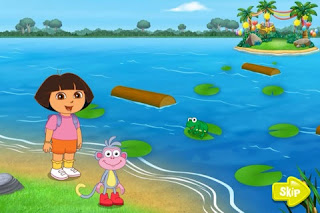
After learning about the quality of the iPad I researched educational applications for the iPad through my iTunes account. The one that I found most attractive was Dora's ABCs Volume 3. Every child I have ever babysat for is in love with watching Dora, so I believe any student would enjoy this application. Most of the users also gave it a five star rating.
The application helps students to learn to read with Dora. While they are learning, they are also enjoying it because each level as a new task to help Dora conquer. At one point in the application the child gets to help Dora "get the frogs across the pond" by reading. It is a very cute and interactive way to get students involved in learning to read.
From the video, What is Peer Editing?, I learned the importance of peer editing. A peer is someone your own age or a classmate. Editing is the process of making comments, compliments, or corrections to writing. Peer editing is working with someone your own age to improve or edit their writing.
By listening to the video, I learned that the three steps to peer editing are compliments, suggestions, and corrections. No matter what, a editor always needs to begin their comment with a compliment. Compliments encourage the writer to continue their work, not bring them down. An editor follows his/her compliments with suggestions. The suggestions give the writer specific ideas on how to make their writing better. When making a suggestion, the editor must remember the purpose of the writer's blog post and guide the writer to better their topic or catch off topic sentences.
The final step to peer editing is the use of corrections. When an editor is reading a writer's blog post, they must remember to check punctuation, grammar, sentences, and spelling. Please do not forget to stay positive through out the whole process of peer editing. There are nice ways to correct someone else's writing, and peer editing is not meant to discourage anyone's motivation.
Peer Edit with Perfection Tutorial
The slideshow called Peer Edit with Perfection Tutorial encouraged reader's to peer edit properly because it is fun! When a student peer edits a classmates work, they are not only improving their own grammar skills but helping a classmate in their writing as well. When an editor corrects a classmate's writing they are helping the writer to improve, revise, and edit his/her work.
The three steps to peer editing are the same in the video I watched and the slideshow I viewed. I will remind again that the three steps to peer editing are compliments, suggestions, and corrections. One must always remember to stay positive, be specific, and complete all three steps when peer editing.
The beginning of your peer editing starts with a compliment. In this slideshow, I was able to see an example of writing and actually practice critiquing. I learned from this activity that even with writing that has poor grammar, there is always a compliment to be said. For example, I loved the topic that the example writer wrote about in the slideshow, so I started my practice comment by letting the writer know how much I enjoyed his/her topic.
From reading the slideshow I was also able to gather the importance of making sure my suggestions are detailed and specific. If I have a suggestion for a writer, it is in their best interest for me to give examples of how they could revise their document. Otherwise, the writer will not know why they need to correct the problem or how they can edit the situation.
As an editor it is important to be at the top of your game on making corrections for spelling errors, grammar mistakes, missing or unneeded punctuation, and incomplete or run-on sentences. This final step to peer editing is important to me because I am a future educator of the world. As a teacher, I need to know how to correct my students' work, so why not practice it now?
Writing Peer Review Top 10 Mistakes
I absolutely loved watching Writing Peer Review Top 10 Mistakes! If you have not seen this YouTube video before, I highly encourage you to go check it out now. It is created by elementary students who were learning the correct way to peer review in their classroom. The examples used in the video are all cute and creative!
One of the examples that I liked was "Mean Margaret" because the student who played Margaret let her acting skills shine. She showed viewers exactly how to be extremely negative which is the opposite of what peer review is all about. In peer review it is necessary to stay positive and uplifting towards the writer when critiquing their work. No one wants to hear harsh, mean comments about their writing because we all have feelings and desire to be uplifted by our classmates!
Technology in Special Education
I am so glad we were assigned to watch the video Technology in Special Education because it completely opened my eyes to a different look on technology. Before watching this video, I did not realize how influential the use of technology can be in the life of a special education student. The incorporation of computers/laptops into special education classrooms has increased the communication level between teachers and students. Many special needs students are non-verbal or they have trouble communicating accurately. However, the use of lap tops makes it easier for students "state" their opinion by typing sentences.
Not only do the teachers enjoy using technology in the classrooms, but they students love it as well! One student in the video named Chris typed on his computer, "I like using my computer because it helps me to talk." Another example of technology that is being incorporated into the classroom is an Ipod touch. Students who used to have to have aids help them with silent reading can now listen and follow along with stories uploaded to their Ipod touch.
I believe it is important to make sure that the special education students know how to use the technology equipment we use today, so they can keep adapting new inventions as they enter the real world. Before the improvements in technology there were not many jobs that disabled citizens could apply for. If all the special needs students now how to type and use a computer though, they have a better chance of continuing their education. I highly agree with the students' end closing when they said, "Technology helps us to succeed in life!"
How the iPad Works with Academics for Autism
Braden is a elementary student who struggles with Autism. His father made a video, How the iPad Works with Academics for Autism, to show the world one of the many features to an iPad. He downloaded numerous of apps for his iPad to help his son in school. While watching the video, it was easy to see how easily entertained and hooked Braden was to learning with his iPad.
On of the apps that Braden uses in the video is called "My First Words". This is a fun activity/game that helps children to practice their sight words. The word pops up on the screen and the iPad tells the child what the word is. The child then repeats the word out loud and then touches the word to move on the next one. This activity is a good hands on app that gets the fine motor skills moving in a child's brain.
After watching this video I was able to see how handy an iPad really is. It has many applications that are not on my computer. The iPad is also much easier to use for those type of applications because it has a touch screen.
Harness Your Students' Digital Smarts
Vicki Davis is one of the many teachers that incorporates the use of blogs into her classroom. Her video called Harness Your Students' Digital Smarts showed me how useful blogging in the classroom can be. Her students blog on the "flat classroom conference" which is a blog site for students all over the world. The students are able to comment and communicate with children from other cultures.
Another idea that she had that caught my eye was the fact that she took her students on a trip to another country to see other students they had blogged with and learn about their culture. Not every school has the time and money to travel like this, but it is still a creative way to learn about other cultures through blogging. She also requires her students to have a Wiki. I loved how she stated that through her incorporation of technology she is "learning from her students". As teachers, we never quit learning.
Dora's ABCs Volume 3
After learning about the quality of the iPad I researched educational applications for the iPad through my iTunes account. The one that I found most attractive was Dora's ABCs Volume 3. Every child I have ever babysat for is in love with watching Dora, so I believe any student would enjoy this application. Most of the users also gave it a five star rating.
The application helps students to learn to read with Dora. While they are learning, they are also enjoying it because each level as a new task to help Dora conquer. At one point in the application the child gets to help Dora "get the frogs across the pond" by reading. It is a very cute and interactive way to get students involved in learning to read.

Friday, September 14, 2012

Wednesday, August 29, 2012
Blog Post Assignment 2
Did You Know?
Dr. Strange made his own version of Did You Know? based on the version by Karl Fisch and Scott McLeod. Their version is called Did You Know? 3.0.
Dr. Strange's version focuses on informing future educators on how important technology and preparation is when you become a teacher. He created a video full of facts and statistics of education and languages around the world. For example, he starts off with stating, "25% of the population of India with the highest IQ out numbers the entire population of the United States."
Another fact mentioned in Strange's version that stood out to me is that "18 million Chinese citizens speak English, and 300 million are learners." This statement caught my attention because we can barely use the English language correctly in America, let alone learn another language. How many of you can honestly say you are fluent in another language?
We, as future educators, should be paying attention to videos and information like this because in a few years this may become a reality. It makes me nervous that another country will soon be more fluent in our language than we are. It is my goal to make sure my students understand and appreciate the English grammar, not just learn the rules.
According to Dr. Strange's video, "Today's learners will have 10-14 jobs by the age 38." When I become a teacher, I will have to prepare students for not just one job but 10-14. This statistic could also change or increase in the next ten years as well. It is important for educators to continue to educate themselves in order to keep their teaching up to date.
At the end of the video, Dr. Strange ask his listeners, "And you want to be an educator?" My answer to Dr. Strange is YES! I understand that as a future educator I am taking on a big responsibility, and I hope to be the role model students need in life.
Did You Know? 3.0
Karl Fisch and Scott McLeod's original version of Did You Know 3.0 has different meaning behind it, but it can still be interpreted as a wake up call to future educators. The difference is that this video focuses on how technology and the world are changing while giving you freedom to develop your own interpretation of the effects.
One of the questions that stood out to me the most in this video was when Fisch and McLeod asked, "Whom did we ask before Google searches?" In the past, research had to be conducted in the library or in another resource center through encyclopedias and books. Today, we can find answers with the click of a button. Our world is going "green" in the sense that more and more articles, research, and books are being published or purchased online to save time, paper, and money.
When I watched the ending of the video and saw the last question, "So what does it all mean?", I took to heart how important technology is. As a future educator, I now understand the importance of incorporating technical resources into my classroom. I plan to adapt to and learn how to use any new technology that comes my way.
Mr. Winkle Wakes
Mr. Winkle Wakes is a cute, comical video created by Mathew Needleman. In this video, the character, Mr. Winkle, wakes after sleeping for 100 years. He gets up to go to work, but when he walks outside everything looks unfamiliar. His office is now inside a tall building full of computers and other resources he does not know how to use.
In distress from a complicated office he goes to the hospital because he is feeling loopy. Once he walks into the hospital he begins to feel even worse. The doctors are using x-rays and other resources that he is unfamiliar with. With no were else to run, Mr. Winkle heads to his old school.
Inside his school he feels comfortable and warm because it is still familiar to him. The students are sitting in desk while listening to a teacher lecture, but the computers sit in the back collecting dust.
Needleman illustrates an excellent issue that is seen in classrooms today. There is not enough use of technology, and it needs to be addressed. I know that some school systems cannot afford top notch technology because they are funded by the government. However, teachers need to use the resources they do have to their greatest ability. When I teach, I plan to incorporate technology into my lessons as much as possible.
The Importance of Creativity
Ken Robinson once talked on TED about The Importance of Creativity in schools. According to Robinson, "schools kill students' creativity." He believes that everyone is interested in learning in their own creative way. In his speech, he establishes the idea the education is meant to take us into the future that we cannot grasp realistically today.
Robinson stated, "Kids will take a chance. If they don't know, they will take a go. They are not afraid of being wrong." He believes that the education system demolishes this drive in children, because the students are so worried about getting the answers right. They do not use their imagination when they are focused on not making a mistake.
In my classroom, I want to instill in my students that no answer is incorrect if they can back up their answer. It is important to me to challenge children to think outside the box. If I force students to learn information my way they are not learning for themselves, but instead they are simply memorizing.
Ken Robinson stated, "Intelligence is diverse and dynamic." This means that the brain should be interactive with creativity, academics, and fine arts. He mentioned the fact that there are many students who think they are not smart, because their talents are not academics.
This stood out to me, because I believe that every child is unique and brings their own special qualities to the classroom. We are not robots. I want to assess my students based on their achievements, not on their mistakes. It is a goal of mine to challenge every student I teach to go the extra mile and achieve more than they could ever imagine. In order to do that, I will encourage my students to be creative and be true to who they are.
Think About Glass
In February 2012, Corning made a video about A Day Made of Glass. At first, I did not understand what was going on until I watched the A Day Made of Glass: Unpacked version.
Basically, Corning gives you a glimpse of what the future holds. Their plan is to create a tablet that will replace cell phones. These tablets will work other glass products to transfer and display information. It will be luxurious and resourceful, because it is made of glass.
I will be looking forward to the day when I can use one of these large scale information walls in my classroom. They are made of glass, so they will be luxurious and elegant. It will also be nice not to have to use any type of projector. The information would be presented electronically from "my tablet." Although, this new technology would take me sometime to get used to, I would love to be able to adapt it into my teaching.
Hopefully, by the time I am in a classroom the luxurious class activity tables will be affordable. I would love to use one of those in my classrooms! (If you do not know what I am talking about, take a few minutes and watch the video so you can fall in love with them as well.) Having a electronic activity table illuminates the need for numerous activities, because I would be able to create many games or fun ways of learning electronically. Since it is made of glass it will also be easy to keep sanitized and clean.
Technology is changing every day. There are so many new and fun ways to teach lessons. I cannot wait to incorporate different concepts of learning into my classroom using electronic resources.
Project Glass
Google made a terrific improvement in video technology when they created The Google Glasses. At the beginning of July, they had a live demo showing off their new invention. In the demo, experts jumped parachuted off an airplane, landed on a roof, biked downstairs and into the recording studio.
In the video online I got to watch the whole process from "The Google Glasses." It is crazy how they could record from such a high altitude! Who knows, in a few months we might see people walking down the street with blue-tooths in their ears and Google glasses on their face. Technology is never ending and constantly changing, so as a future educator I am prepared for whatever comes my way.
Dr. Strange made his own version of Did You Know? based on the version by Karl Fisch and Scott McLeod. Their version is called Did You Know? 3.0.
Dr. Strange's version focuses on informing future educators on how important technology and preparation is when you become a teacher. He created a video full of facts and statistics of education and languages around the world. For example, he starts off with stating, "25% of the population of India with the highest IQ out numbers the entire population of the United States."
Another fact mentioned in Strange's version that stood out to me is that "18 million Chinese citizens speak English, and 300 million are learners." This statement caught my attention because we can barely use the English language correctly in America, let alone learn another language. How many of you can honestly say you are fluent in another language?
We, as future educators, should be paying attention to videos and information like this because in a few years this may become a reality. It makes me nervous that another country will soon be more fluent in our language than we are. It is my goal to make sure my students understand and appreciate the English grammar, not just learn the rules.
According to Dr. Strange's video, "Today's learners will have 10-14 jobs by the age 38." When I become a teacher, I will have to prepare students for not just one job but 10-14. This statistic could also change or increase in the next ten years as well. It is important for educators to continue to educate themselves in order to keep their teaching up to date.
At the end of the video, Dr. Strange ask his listeners, "And you want to be an educator?" My answer to Dr. Strange is YES! I understand that as a future educator I am taking on a big responsibility, and I hope to be the role model students need in life.
Did You Know? 3.0
Karl Fisch and Scott McLeod's original version of Did You Know 3.0 has different meaning behind it, but it can still be interpreted as a wake up call to future educators. The difference is that this video focuses on how technology and the world are changing while giving you freedom to develop your own interpretation of the effects.
One of the questions that stood out to me the most in this video was when Fisch and McLeod asked, "Whom did we ask before Google searches?" In the past, research had to be conducted in the library or in another resource center through encyclopedias and books. Today, we can find answers with the click of a button. Our world is going "green" in the sense that more and more articles, research, and books are being published or purchased online to save time, paper, and money.
When I watched the ending of the video and saw the last question, "So what does it all mean?", I took to heart how important technology is. As a future educator, I now understand the importance of incorporating technical resources into my classroom. I plan to adapt to and learn how to use any new technology that comes my way.
Mr. Winkle Wakes
Mr. Winkle Wakes is a cute, comical video created by Mathew Needleman. In this video, the character, Mr. Winkle, wakes after sleeping for 100 years. He gets up to go to work, but when he walks outside everything looks unfamiliar. His office is now inside a tall building full of computers and other resources he does not know how to use.
In distress from a complicated office he goes to the hospital because he is feeling loopy. Once he walks into the hospital he begins to feel even worse. The doctors are using x-rays and other resources that he is unfamiliar with. With no were else to run, Mr. Winkle heads to his old school.
Inside his school he feels comfortable and warm because it is still familiar to him. The students are sitting in desk while listening to a teacher lecture, but the computers sit in the back collecting dust.
Needleman illustrates an excellent issue that is seen in classrooms today. There is not enough use of technology, and it needs to be addressed. I know that some school systems cannot afford top notch technology because they are funded by the government. However, teachers need to use the resources they do have to their greatest ability. When I teach, I plan to incorporate technology into my lessons as much as possible.
The Importance of Creativity
Ken Robinson once talked on TED about The Importance of Creativity in schools. According to Robinson, "schools kill students' creativity." He believes that everyone is interested in learning in their own creative way. In his speech, he establishes the idea the education is meant to take us into the future that we cannot grasp realistically today.
Robinson stated, "Kids will take a chance. If they don't know, they will take a go. They are not afraid of being wrong." He believes that the education system demolishes this drive in children, because the students are so worried about getting the answers right. They do not use their imagination when they are focused on not making a mistake.
In my classroom, I want to instill in my students that no answer is incorrect if they can back up their answer. It is important to me to challenge children to think outside the box. If I force students to learn information my way they are not learning for themselves, but instead they are simply memorizing.
Ken Robinson stated, "Intelligence is diverse and dynamic." This means that the brain should be interactive with creativity, academics, and fine arts. He mentioned the fact that there are many students who think they are not smart, because their talents are not academics.
This stood out to me, because I believe that every child is unique and brings their own special qualities to the classroom. We are not robots. I want to assess my students based on their achievements, not on their mistakes. It is a goal of mine to challenge every student I teach to go the extra mile and achieve more than they could ever imagine. In order to do that, I will encourage my students to be creative and be true to who they are.
Think About Glass
In February 2012, Corning made a video about A Day Made of Glass. At first, I did not understand what was going on until I watched the A Day Made of Glass: Unpacked version.
Basically, Corning gives you a glimpse of what the future holds. Their plan is to create a tablet that will replace cell phones. These tablets will work other glass products to transfer and display information. It will be luxurious and resourceful, because it is made of glass.
I will be looking forward to the day when I can use one of these large scale information walls in my classroom. They are made of glass, so they will be luxurious and elegant. It will also be nice not to have to use any type of projector. The information would be presented electronically from "my tablet." Although, this new technology would take me sometime to get used to, I would love to be able to adapt it into my teaching.
Hopefully, by the time I am in a classroom the luxurious class activity tables will be affordable. I would love to use one of those in my classrooms! (If you do not know what I am talking about, take a few minutes and watch the video so you can fall in love with them as well.) Having a electronic activity table illuminates the need for numerous activities, because I would be able to create many games or fun ways of learning electronically. Since it is made of glass it will also be easy to keep sanitized and clean.
Technology is changing every day. There are so many new and fun ways to teach lessons. I cannot wait to incorporate different concepts of learning into my classroom using electronic resources.
Project Glass
Google made a terrific improvement in video technology when they created The Google Glasses. At the beginning of July, they had a live demo showing off their new invention. In the demo, experts jumped parachuted off an airplane, landed on a roof, biked downstairs and into the recording studio.
In the video online I got to watch the whole process from "The Google Glasses." It is crazy how they could record from such a high altitude! Who knows, in a few months we might see people walking down the street with blue-tooths in their ears and Google glasses on their face. Technology is never ending and constantly changing, so as a future educator I am prepared for whatever comes my way.
Friday, August 24, 2012
Blog Assignment 1
About Me
My name is Amy Archer. I was born and raised in Decatur, AL. In May 2010, I graduated from Decatur High School with honors. Two months later I came down to Mobile, and I began a new chapter in my life as a Freshman at The University of South Alabama. I chose to study here, because I did not want to go straight into Auburn University or The University of Alabama. One distinguishing quality of The University of South Alabama is that it is a moderate size university and offers many outstanding programs, yet my professors know me by name. I am currently a Junior, and I have a double major in Elementary Education and Foreign Language with a concentration in Spanish.
I was born into a family with two very loving parents and two amazing siblings. As the oldest of three, my parents have always pushed me to go the extra mile in anything I do. My family is very close, and every summer we take a vacation with my mom's siblings and their children to Fort Morgan. My family has always played a big role in my life, especially my mom. She has taught for over twenty years, and she inspired me to become a teacher. I knew at a young age that I wanted to be a teacher, because I wanted to follow in my mother's foot steps.
Obviously, I have a passion for working with children. Otherwise I would not be here today. It is one of my goals to work in a Title 1 school one day, because I want to better my community and encourage children to achieve their goals like I did. In my spare time I love to run! Last March I ran in the Rock n' Roll marathon in New Orleans, LA. A month ago I competed in my first mini-triathlon in my hometown. This February I have set my goal higher and plan to run in the Rock n' Roll marathon again, but compete in the full marathon instead of the half. (That is 27.2 miles for those of you who do not know how long a marathon is.)
When I am not in class or studying, I also participate in many organizations on campus. In Fall 2010, I became a life long member of Alpha Omicron Pi. My sisters mean the world to me, and they have become my second family. This year I received the honor to be a member of the Student Government Association as a Senator for the Education Department. I plan to affiliate with the new "Leos" Club that is being established by Lion's Club members. On Tuesday afternoons I volunteer at the Boy's and Girl's Club downtown in the after school care.
I am a very active and motivated young lady. I like to stay busy, and I'm always on the go. Although I am a busy bee, meeting new people is something I do best. With that being said, do not hesitate to wave or say hey the next time we meet.
Randy Pausch on Time Management
Randy Pausch once made a speech on Time Management. In the YouTube video that I watched, he emphasized on "doing the right things", rather than "doing things right." Another quoted he said was, "Failing to plan is planing to fail."His key to avoiding stress and procrastination was to plan each day, each week, and each semester. He thought it was important to plan, because "you can always change your plan later-only if you have one."
One of the key points that Randy Pausch emphasized that stood out to me was to focus on doing the right things. I am a perfectionist, so I focus on the opposite, which to do things right. I learned from Pausch that I need to do all that I can in life. After all, experiences and life lessons come from bad judgement. I am going to mess up in life, but that is okay because next time I will know how to handle the situation.
When he said, "Failing to plan is planning to fail", I really took it to heart. If I do not create a plan for today, tomorrow, or next semester I will not go forward. I will stay where I am and never succeed. Though I may change my plan every other day, I have moved one step forward by setting goals to reach and priorities to keep.
About Randy Pausch
Randy Pausch died on July 25, 2008. He was diagnosed with pancreatic cancer in 2006. He passed away due to complications from the cancer. Although he suffered a great deal over those two years, he did not show it. The doctors did not expect him to live as long as he did, but Randy had energy and enthusiasm for life. Randy Pausch left a legacy of excellence and integrity. He makes a great role model for anyone, and his blog posts, videos, and pictures can be found all over the internet. We can learn so much from him and realize that our struggles are not the end of the world.
Time Management
Penn State's Learning website has articles on Time Management Exercises and Time Management Lessons. Time Management Exercises teaches you how to prioritize your time and use it wisely. If you sleep 7 hours a night, 7 days a week then you are left with a total of 119 hours to your week. How you use those hours is up to you. Penn State said, "You can monitor these hours or become a Time Waster." Their article, incorporated the use of a calendar and a mini planner to keep up with daily to-do lists and upcoming events. The website also has a time exercise where you can enter in how many hours you spend on eating, sleeping, and daily hygiene a week to see how many hours you are really leaving for studying and extra curricular events.
The other article on Time Management Lessons focuses on creating a "time table" for your life. In order to make a time table, you need a blank calendar with semi-large sized boxes, a planner, all your courses' syllabi, and a copy of the campus calendar. On your calendar you write out the dates of upcoming test, campus events, and things you want to do for fun. In your planner, you write your daily to do list. Penn state emphasizes, though, that it is important not to create a to-do list that you cannot accomplish in one day.
From both of these articles I learned many new ways to prioritize my time and better prepare myself for the semester. I already have a planner, but I learned from Penn State that I am not prioritizing my time properly in order to complete these events. I fall into the category of a "time waster" many days and would rather catch up on the latest episode of my favorite shows on television. I need to keep a better lay out to my day and invest in Hulu Plus, so I can accomplish all of my tasks. I am glad that Dr. Strange assigned these two articles to our class, because I learned life valuable lessons on time management.
My name is Amy Archer. I was born and raised in Decatur, AL. In May 2010, I graduated from Decatur High School with honors. Two months later I came down to Mobile, and I began a new chapter in my life as a Freshman at The University of South Alabama. I chose to study here, because I did not want to go straight into Auburn University or The University of Alabama. One distinguishing quality of The University of South Alabama is that it is a moderate size university and offers many outstanding programs, yet my professors know me by name. I am currently a Junior, and I have a double major in Elementary Education and Foreign Language with a concentration in Spanish.
I was born into a family with two very loving parents and two amazing siblings. As the oldest of three, my parents have always pushed me to go the extra mile in anything I do. My family is very close, and every summer we take a vacation with my mom's siblings and their children to Fort Morgan. My family has always played a big role in my life, especially my mom. She has taught for over twenty years, and she inspired me to become a teacher. I knew at a young age that I wanted to be a teacher, because I wanted to follow in my mother's foot steps.
Obviously, I have a passion for working with children. Otherwise I would not be here today. It is one of my goals to work in a Title 1 school one day, because I want to better my community and encourage children to achieve their goals like I did. In my spare time I love to run! Last March I ran in the Rock n' Roll marathon in New Orleans, LA. A month ago I competed in my first mini-triathlon in my hometown. This February I have set my goal higher and plan to run in the Rock n' Roll marathon again, but compete in the full marathon instead of the half. (That is 27.2 miles for those of you who do not know how long a marathon is.)
When I am not in class or studying, I also participate in many organizations on campus. In Fall 2010, I became a life long member of Alpha Omicron Pi. My sisters mean the world to me, and they have become my second family. This year I received the honor to be a member of the Student Government Association as a Senator for the Education Department. I plan to affiliate with the new "Leos" Club that is being established by Lion's Club members. On Tuesday afternoons I volunteer at the Boy's and Girl's Club downtown in the after school care.
I am a very active and motivated young lady. I like to stay busy, and I'm always on the go. Although I am a busy bee, meeting new people is something I do best. With that being said, do not hesitate to wave or say hey the next time we meet.
Randy Pausch on Time Management
Randy Pausch once made a speech on Time Management. In the YouTube video that I watched, he emphasized on "doing the right things", rather than "doing things right." Another quoted he said was, "Failing to plan is planing to fail."His key to avoiding stress and procrastination was to plan each day, each week, and each semester. He thought it was important to plan, because "you can always change your plan later-only if you have one."
One of the key points that Randy Pausch emphasized that stood out to me was to focus on doing the right things. I am a perfectionist, so I focus on the opposite, which to do things right. I learned from Pausch that I need to do all that I can in life. After all, experiences and life lessons come from bad judgement. I am going to mess up in life, but that is okay because next time I will know how to handle the situation.
When he said, "Failing to plan is planning to fail", I really took it to heart. If I do not create a plan for today, tomorrow, or next semester I will not go forward. I will stay where I am and never succeed. Though I may change my plan every other day, I have moved one step forward by setting goals to reach and priorities to keep.
About Randy Pausch
Randy Pausch died on July 25, 2008. He was diagnosed with pancreatic cancer in 2006. He passed away due to complications from the cancer. Although he suffered a great deal over those two years, he did not show it. The doctors did not expect him to live as long as he did, but Randy had energy and enthusiasm for life. Randy Pausch left a legacy of excellence and integrity. He makes a great role model for anyone, and his blog posts, videos, and pictures can be found all over the internet. We can learn so much from him and realize that our struggles are not the end of the world.
Time Management
Penn State's Learning website has articles on Time Management Exercises and Time Management Lessons. Time Management Exercises teaches you how to prioritize your time and use it wisely. If you sleep 7 hours a night, 7 days a week then you are left with a total of 119 hours to your week. How you use those hours is up to you. Penn State said, "You can monitor these hours or become a Time Waster." Their article, incorporated the use of a calendar and a mini planner to keep up with daily to-do lists and upcoming events. The website also has a time exercise where you can enter in how many hours you spend on eating, sleeping, and daily hygiene a week to see how many hours you are really leaving for studying and extra curricular events.
The other article on Time Management Lessons focuses on creating a "time table" for your life. In order to make a time table, you need a blank calendar with semi-large sized boxes, a planner, all your courses' syllabi, and a copy of the campus calendar. On your calendar you write out the dates of upcoming test, campus events, and things you want to do for fun. In your planner, you write your daily to do list. Penn state emphasizes, though, that it is important not to create a to-do list that you cannot accomplish in one day.
From both of these articles I learned many new ways to prioritize my time and better prepare myself for the semester. I already have a planner, but I learned from Penn State that I am not prioritizing my time properly in order to complete these events. I fall into the category of a "time waster" many days and would rather catch up on the latest episode of my favorite shows on television. I need to keep a better lay out to my day and invest in Hulu Plus, so I can accomplish all of my tasks. I am glad that Dr. Strange assigned these two articles to our class, because I learned life valuable lessons on time management.
Subscribe to:
Posts (Atom)